US corn harvesting reached 81% by November 8, five percentage points behind the seasonal average, while soybean harvesting reached 92%, one point ahead. The USDA report released November 9 highlights uneven timing of crop availability rather than evidence of a smaller harvest.
The national gap hides larger local delays
Corn advanced from 74% a week earlier against a 2021 to 2025 average of 86%. Iowa stood at 72% against 89%, and South Dakota at 68% against 85%. Soybeans advanced from 88% to 92%, compared with a 91% average. These are survey estimates of harvested acreage, not shares of final production or grain already delivered to buyers. USDA Crop Progress.
NASS provides no corresponding 2025 weekly reading because those reports were cancelled during a funding lapse. Its five year averages combine published observations for 2021 through 2024 with imputed estimates for 2025. The benchmark remains useful, but is not five years of directly reported weekly observations.
Availability and crop size answer different questions
A slower harvest can postpone deliveries to elevators, feed mills and ethanol plants. If nearby users need grain before local harvesting catches up, they may compete more strongly for available supplies. That could support local cash bids even when the eventual crop is ample. The report does not measure that price response.
The opposite outcome is also possible. Existing inventories, deliveries from other areas or weaker demand can cushion the delay. Once fieldwork accelerates, a concentrated arrival of grain may increase pressure on drying, storage and transport. Neither scenario establishes a national shortage or a reduction in yield.
For growers, the relevant questions are the cost of finishing harvest and the bid available at their delivery point. For processors, timing affects procurement and plant scheduling. For grain handlers, more arrivals can raise throughput while also increasing operating demands. The same harvest percentage therefore does not imply the same earnings effect across the supply chain.
Winter wheat belongs to another crop cycle
Winter wheat planting reached 89% and emergence 76%. Good or excellent condition rose to 49% from 44%. This autumn crop is intended for the 2027 harvest. Its condition rating is neither a yield estimate nor a measure of wheat currently available for export.
The November GEOGLAM assessment, based on conditions as of October 28, describes recent rain easing drought in parts of the Central and Southern Plains. That earlier context does not prove what caused the latest weekly rating change. Weather must be assessed against crop location and stage, and no tonnage loss is inferred here.
Match the asset to the physical market
FOLITIC's Corn and Soybeans pages describe Minneapolis terminal elevator cash references for US No. 2 yellow corn and US No. 1 soybeans, respectively, in dollars per bushel for current truck delivery. Hard red winter wheat, or HRW, refers to US No. 1 ordinary protein wheat at North Central Colorado country elevators.
These specific cash references are distinct from national harvest estimates and exchange traded contracts. No current quotation, futures expiry or measured market reaction is asserted. Check each page's observation date before comparing prices.
The next test is production and subsequent fieldwork
The NASS calendar schedules Crop Production for November 10 at noon Eastern Time and the next Crop Progress for November 16 at 4 p.m. Eastern Time. Both are forthcoming at this article's publication. Production estimates and subsequent harvest progress will answer different parts of the supply question.
Export bookings, inspections and completed shipments also remain separate measures. A crop harvested domestically is not necessarily available at an export port. Our guide to reading commodity reports explains how to keep these comparisons consistent.
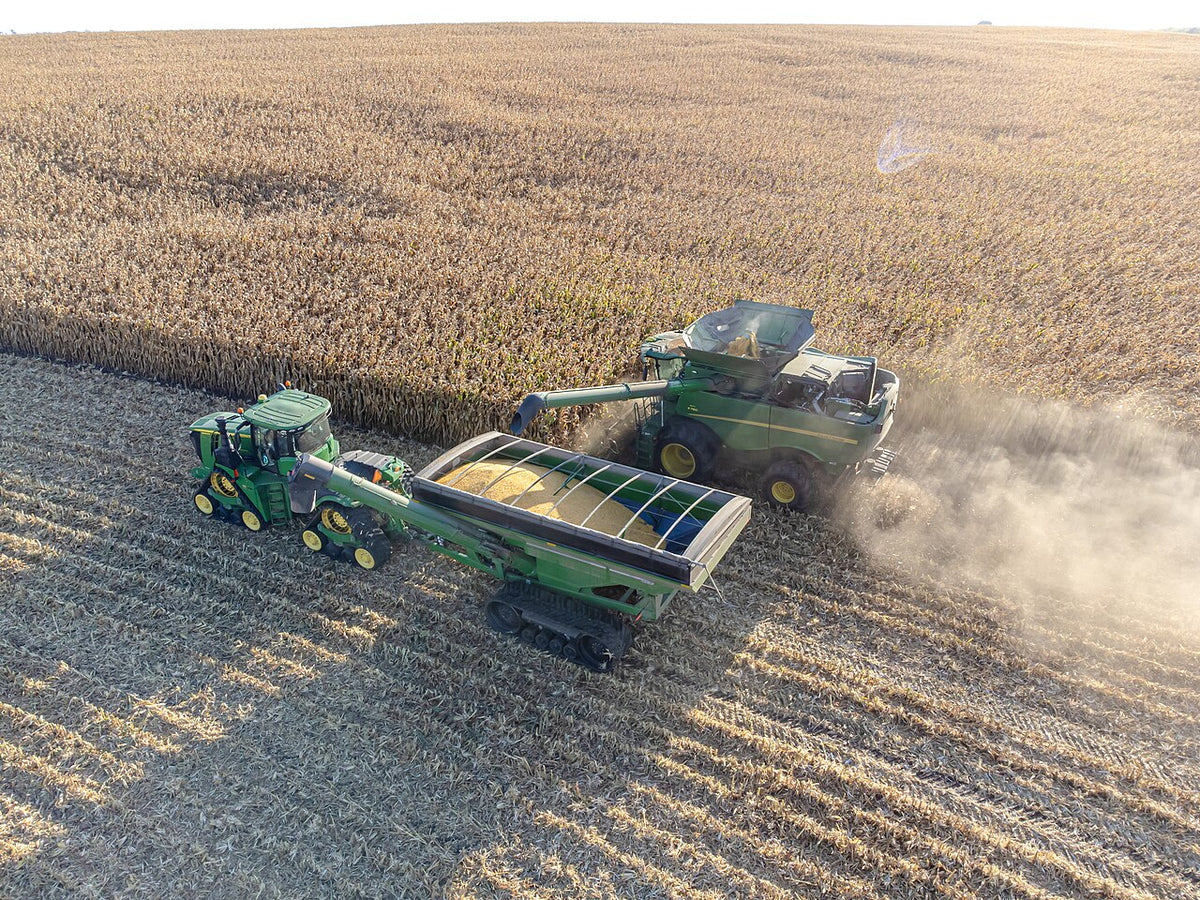
Illustrative archive photograph of a corn combine and grain cart on October 1, 2023, by Wikideas1 via Wikimedia Commons. Dedicated to the public domain under CC0 1.0. It does not document the November 2026 harvest.