Malaysia held more natural rubber in September even as export shipments fell. Stocks rose 5.6% from August to 142,523 tonnes, while exports dropped 11.9% to 29,438 tonnes, according to statistics released on November 10.
Production increased 7.3% to 31,657 tonnes. The combination puts inventory management in focus, but does not establish a global rubber surplus or prove that manufacturers can obtain every grade more cheaply.
More stock can mean more cash tied up
The reported stock increase was 7,507 tonnes. Processors held 76.5% of the total. For a business financing unsold material, more inventory can tie up working capital and add storage costs. Those effects depend on ownership, funding terms and turnover, none of which can be calculated from national tonnage alone.
Production minus exports is not a full inventory balance. Imports, domestic use and reporting adjustments also matter. Treating the two headline flows as the whole balance would risk misidentifying the reason stocks increased.
Different rubber inputs moved differently
The report puts average concentrated latex at 6.81 Malaysian ringgit per kilogram in September, down 1.1% from August. Scrap averaged 8.56 ringgit per kilogram, up 9.1%. These are monthly averages for different materials, not live prices or directly interchangeable grades.
A manufacturer buying latex therefore faces a different input signal from a processor buying scrap. A broader stock increase cannot replace a quotation for the required specification. Buyers also need to compare delivery cost, contract timing and any currency exposure before drawing conclusions about savings.
What comes next
Malaysia’s official release calendar lists third quarter GDP on November 18 and October consumer prices on November 19. They provide economic context within the next seven days, but neither is a new rubber inventory count. The next rubber release, rather than a general inflation number, is the direct check on whether the stock build continues.
See our guide to grains and soft commodity markets for the distinction between physical inputs and financial contracts.
Source Department of Statistics Malaysia, September 2026 rubber statistics, released November 10. Stock change calculated from 142,523 minus 135,016 tonnes.
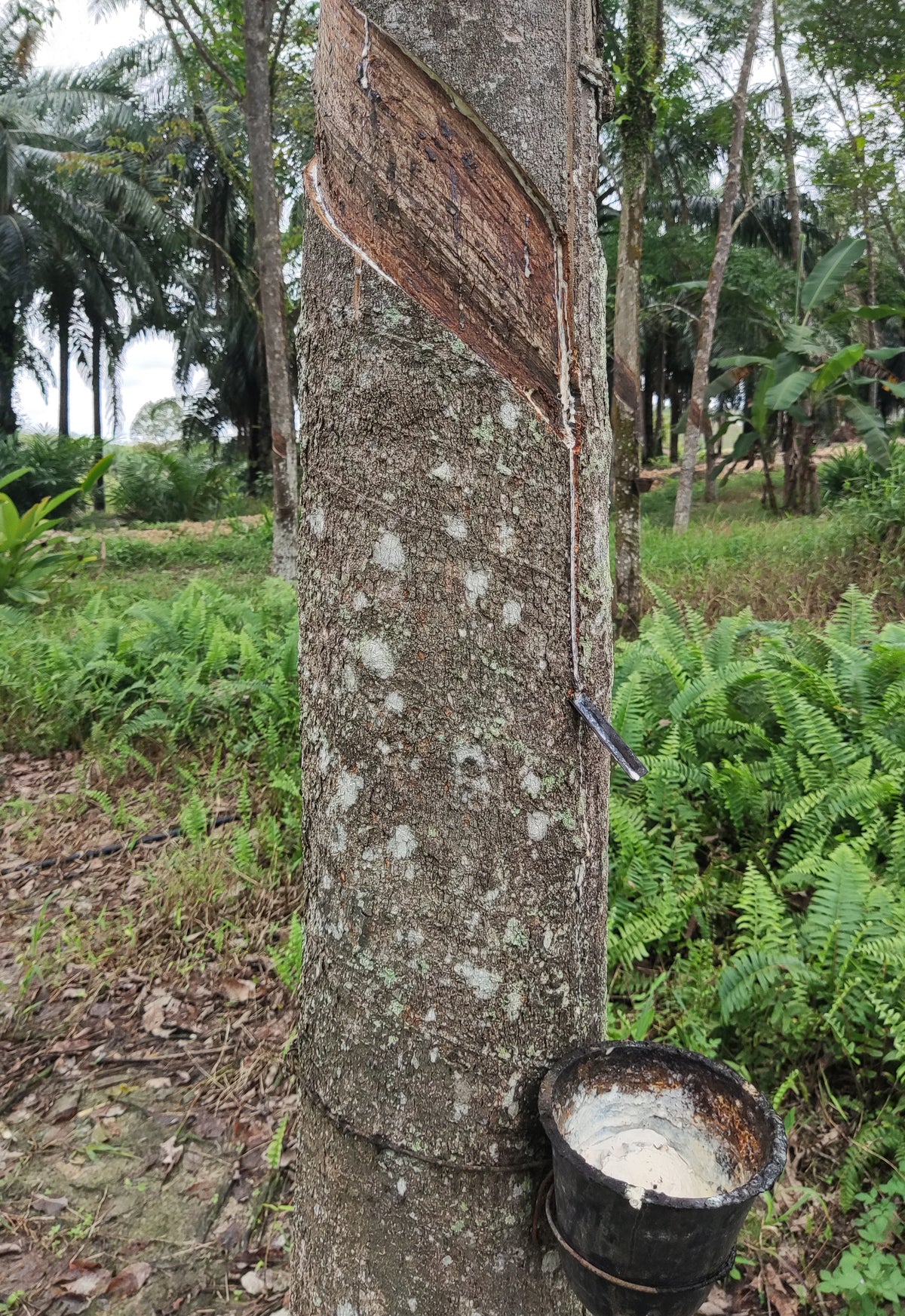
Archival photograph from April 2025 by Wee Hong, under Creative Commons Attribution ShareAlike 4.0. No further changes. The image illustrates rubber collection and does not document the reported month.