

Fees and Share Classes · Mutual Funds
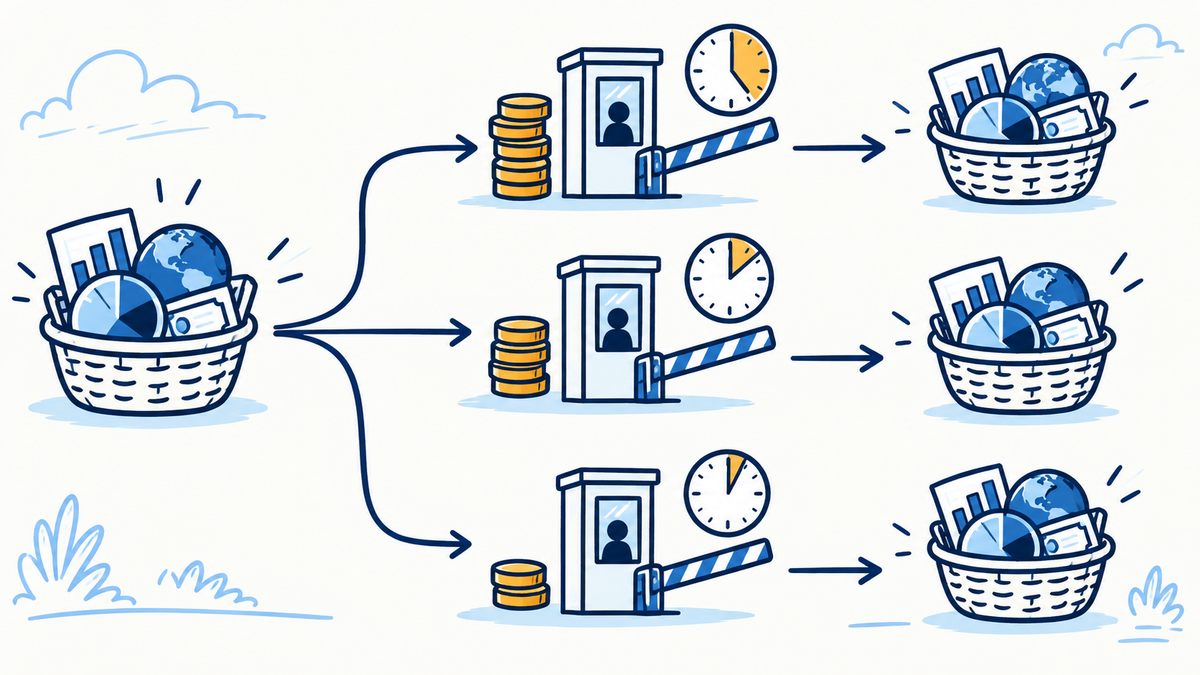
Share classes can own the same portfolio while charging investors differently. The right comparison follows the money across entry costs, annual charges and any exit charge.
One portfolio can have several prices of access
A class label identifies a fee and eligibility arrangement, not a separate investment strategy. Different annual expenses mean classes can report different returns even with the same underlying holdings. Naming conventions vary between providers and markets. Read the exact prospectus for the class rather than assuming a familiar letter always has the same meaning.
Distinguish entry and exit charges
An initial sales load reduces the amount reaching the portfolio unless paid separately. A contingent deferred sales charge may apply on redemption under a specified schedule. Ongoing distribution or servicing fees may also be included in operating expenses. A class advertised without a sales load can still have annual expenses and platform charges.
Calculate investable capital
If a hypothetical 4% entry load is deducted from a $10,000 payment, $9,600 is invested. A 5% return on that amount produces $10,080 before other costs, only $80 above the original payment. The investment return on the fund and the investor's return on money paid are not identical when the entry cost is included.
Use the expected holding period carefully
A lower entry charge with higher recurring expenses may look attractive for a short holding period but become expensive over many years. Include automatic class conversions or charges that expire if they are part of the actual terms. Do not choose a long holding period merely to make an expensive class appear competitive when your cash needs are uncertain.
Ask about incentives and alternatives
An intermediary can receive different compensation for selling different classes. Request the eligible alternatives, total costs and reason for the recommendation. Eligibility requirements may prevent access to a cheaper class, but that should be demonstrated rather than assumed.
Try it yourself
A $6,000 payment has a 3% sales load deducted at purchase. What amount starts working in the fund?
Show the worked answer
The sales load is $180 and $5,820 is invested. Operating expenses and any later charges still need to be considered.
Further reading
Educational material, not a recommendation to buy or sell a fund. Numerical examples are hypothetical. Fund terms, investor eligibility and tax treatment vary by product, account and jurisdiction.
Continue learning
- Previous lesson: Expense ratios, waivers and the cost of time
- Next lesson: Breakpoints, eligibility and platform charges
- Explore all Mutual Funds lessons


