Commodities Explained / Ways to Invest
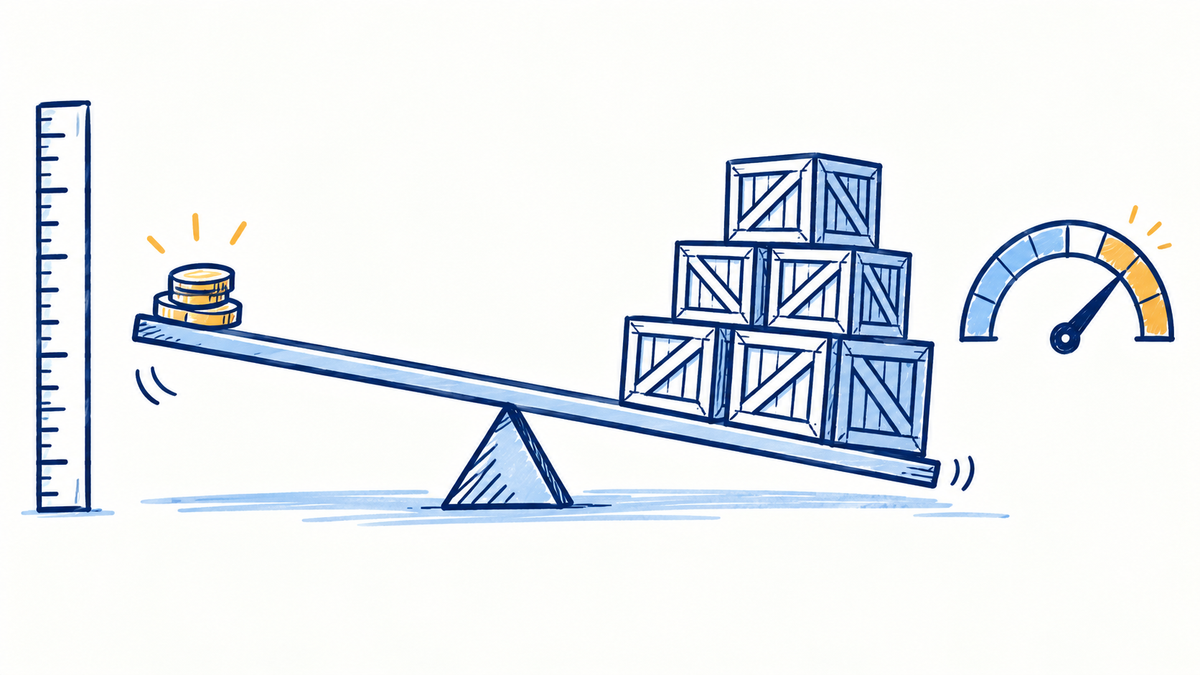
Use contract size and price changes to calculate futures exposure, then see why margin is not a limit on potential loss.
Calculate exposure before looking at margin
A futures contract specifies a quantity, quotation unit and settlement terms. Multiplying contract quantity by its price gives a useful measure of notional exposure. The margin required to hold the contract is only part of that amount.
In a hypothetical contract for 5,000 units at 6 dollars each, notional exposure is 30,000 dollars. If the required initial margin is 3,000 dollars, depositing that amount does not reduce the price exposure to 3,000 dollars. Actual contracts and broker requirements differ.
A small price move can consume a large deposit
For a long position, a fall from 6 dollars to 5.70 dollars creates a loss of 1,500 dollars: 5,000 multiplied by 0.30. That is 5 percent of initial notional exposure and 50 percent of the hypothetical initial margin.
Futures positions are marked to market and cash requirements can change. Additional funds may be required, and a broker can close a position under its rules. Losses can exceed the original margin deposit. Treat margin as a performance requirement, not a maximum loss.
Expiry introduces another decision
A futures contract has a defined life. Depending on the contract, settlement can involve cash or physical delivery. Broker deadlines can occur before exchange deadlines. An investor who wants continuing exposure must understand when and how the position will be closed or replaced.
Rolling means closing one contract and opening another maturity. The new contract can have a different price, liquidity and margin requirement. It is not an automatic extension of the same position at the same terms.
Prepare a cash and loss scenario
Before considering a contract, identify its size, tick value, trading hours, settlement method, expiry, margin rules and available liquidity. Calculate several adverse price moves in cash. Include the possibility that execution is worse than an intended exit price.
A stop order is an instruction, not insurance against every loss. Fast markets, gaps and trading constraints can affect execution. A useful decision includes whether you can meet cash requirements and tolerate the exposure without relying on a quick recovery.
Put it into practice
The hypothetical 5,000 unit long contract falls by 0.80 dollars from its entry price. Is a 3,000 dollar initial margin deposit enough to cover the price loss?
Check your answer
No. The loss is 4,000 dollars before fees. That exceeds the original deposit by 1,000 dollars. Actual funding demands and liquidation timing depend on exchange and broker rules.