

Leverage and Portfolio Risks · Closed End Funds
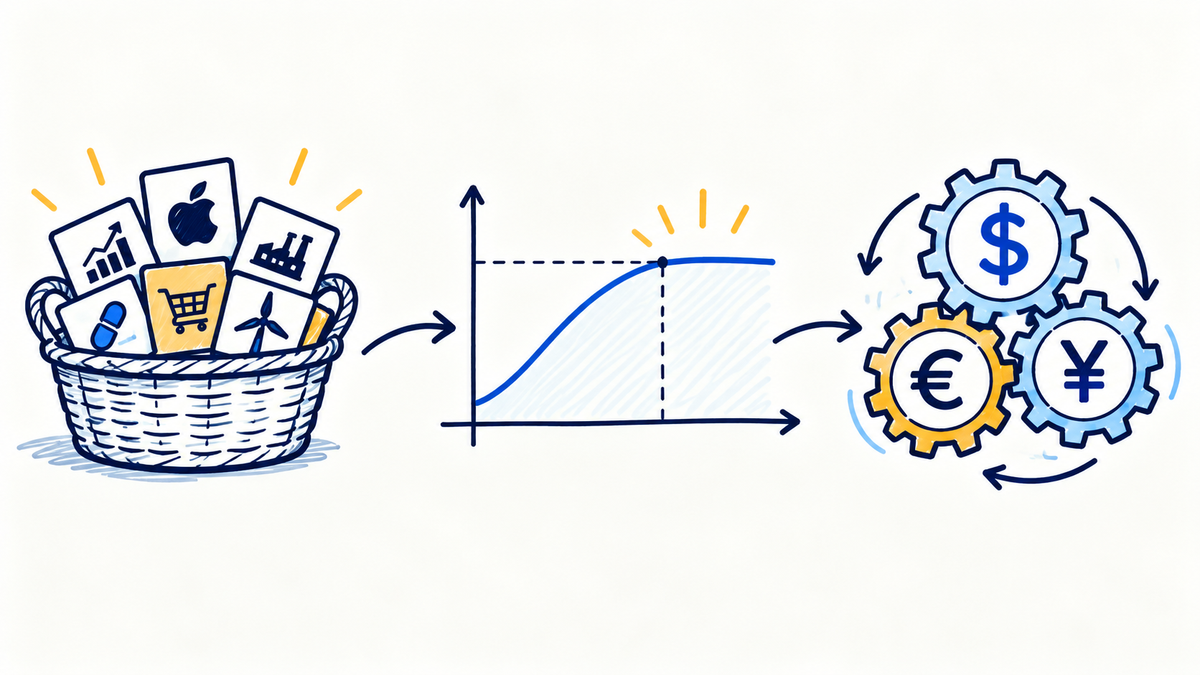
Equity income funds can combine stocks, option writing and foreign currency exposure. Each component changes how portfolio returns behave.
Look through the income label
An equity fund may hold dividend paying companies, growth stocks, infrastructure businesses or a concentrated sector. The distribution policy does not change the underlying business risks. Review actual holdings and position sizes rather than inferring a conservative portfolio from a regular monthly payment.
Option premiums have an economic cost
A covered call strategy receives a premium for selling another party the right to buy an asset at an agreed price. The premium provides some compensation if the asset falls, but does not remove most downside risk. If the asset rises strongly, the call can limit participation. Fund strategies differ in coverage, strike selection, expiry and use of index versus individual stock options.
Use a small payoff example
Suppose a stock is bought at $100 and a call with a $105 strike is sold for $2. Ignoring dividends, costs and early exercise, a final stock value of $120 produces about $7 of combined profit if the call is settled or exercised as assumed. A final value of $80 leaves a loss of about $18. Receiving premium did not create a guaranteed income return.
Separate currency from asset performance
For an unhedged investment, a 5% local currency asset gain combined with a 10% decline in that currency against the reporting currency produces approximately a 5.5% loss. Multiply 1.05 by 0.90, then subtract one. Hedging can change this exposure but has costs, limits and its own terms.
When comparing funds, identify the underlying asset currency, the reporting currency and the hedge policy. Then add leverage and the exchange price discount. Several independent sources of risk can sit behind one apparently simple distribution figure.
Try it yourself
An unhedged asset rises 10% in its local currency while that currency falls 5% against your reporting currency. What is the combined return before costs?
Show the worked answer
Multiply 1.10 by 0.95 to get 1.045. The combined gain is 4.5%, not 5%, because the two effects multiply.
Further reading
- SEC Investor.gov: An introduction to options
- SEC Investor.gov: International investing
- SEC Investor.gov: Publicly traded closed end funds
Educational material, not a recommendation to buy or sell a fund. Numerical examples are hypothetical. Fund terms, investor eligibility and tax treatment vary by product, account and jurisdiction.
Continue learning
- Previous lesson: Duration, credit and municipal bond fund risks
- Next lesson: Reading the prospectus and investment mandate
- Explore all Closed End Funds lessons


