

Bond Foundations · Bonds Explained
Compare the claim you hold
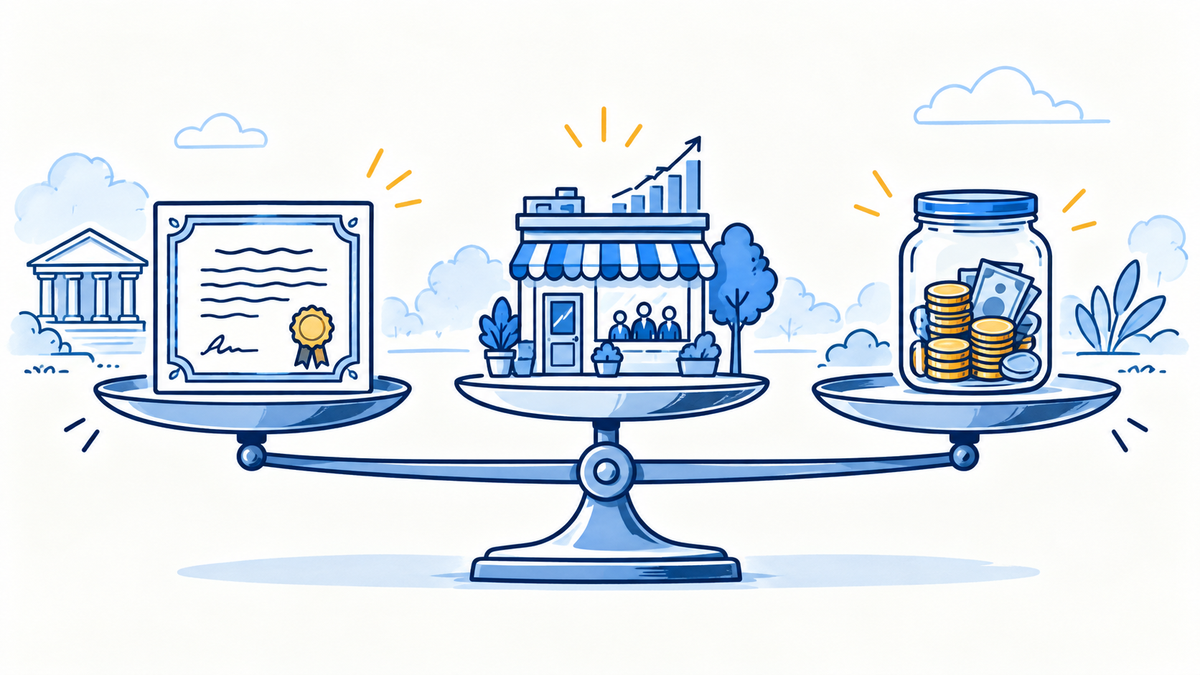
An ordinary bond gives its holder a contractual claim against an issuer. A common share is a residual ownership claim. Cash in a bank account is a claim on the bank, with any deposit protection depending on local rules and eligibility. These are different legal and economic exposures.
A successful company can increase shareholder profits without increasing a fixed coupon. Conversely, common shareholders can lose their investment while creditors still recover part of their claims. Priority improves a position in a loss scenario but does not eliminate loss.
Compare uncertainty over your horizon
Cash normally has low day to day nominal price variability in its own currency, but inflation can erode what it buys. Bonds add sensitivity to interest rates, credit and trading conditions. Equities expose the investor to the changing value of residual business cash flows.
A long government bond can fluctuate substantially even if its scheduled payments are regarded as highly dependable. Calling it safe without specifying the risk and time horizon is incomplete.
Use a spending example
Imagine two separate goals: $6,000 needed for tuition next year and money intended for spending fifteen years from now. A large price decline immediately before tuition is due matters more for the first goal. The second goal has a different capacity to absorb price variation, but still needs a considered risk budget.
This example does not prescribe an allocation. It shows why choosing assets begins with the date, currency and flexibility of spending, rather than the asset with the most attractive recent return.
Diversify with a purpose
Mixing assets can reduce dependence on one outcome. It cannot guarantee gains or prevent every drawdown. Bonds and shares can fall together, particularly when inflation or financing conditions change. Evaluate the risks shared across holdings and retain resources for near term obligations rather than assuming any asset label guarantees stability.
Try it yourself
A bond has ten years to maturity, but you must sell it in six months to pay a bill. Is knowing its maturity value sufficient?
Show the worked answer
No. Your outcome depends on the sale price in six months, available liquidity and costs. A contractual maturity payment ten years away does not match the six month spending need.
Further reading
Educational material. Examples are hypothetical and do not recommend a security or a personal allocation. Contract terms and market conventions vary.
Continue learning
- Previous lesson: How to read a bond quote and accrued interest
- Next lesson: Government bonds and sovereign risk
- Explore all Bonds Explained lessons


