

Czech portfolio investment recorded a net inflow of CZK 92.2 billion in September, driven mainly by debt securities issued by domestic commercial banks. The data, released on November 13, show a concentrated source of external financing rather than a broad increase in foreign demand for every Czech asset. That distinction matters when interpreting the flows for EUR/CZK.
Bank financing dominates while government bonds lose holdings
The Czech National Bank's monthly balance of payments commentary identifies CZK 90.4 billion associated with domestic commercial bank debt securities. In contrast, nonresident holdings of government bonds fell CZK 11.5 billion. Domestic investors also reduced foreign equity and investment fund share holdings by CZK 13.9 billion.
The figures describe September transactions between residents and nonresidents. They are not today's orders, a change in asset values caused only by market prices, or a measure of speculative currency positions. The CNB release calendar distinguishes the November 13 publication from its September reference period.
The portfolio total is not the full financing picture
Other investment recorded a net outflow of CZK 48.4 billion. Across the financial account, net borrowing was CZK 8.4 billion, much smaller than the portfolio inflow alone. The portfolio figure therefore should not be presented as the country's net inflow across all financial categories.
A funding transaction can shift the composition of external liabilities without establishing stronger demand for every local instrument. For analysts assessing rollover exposure, the relevant follow up is the maturity, currency and ownership of the new financing. The aggregate commentary does not identify those details for each security.
Why inflows do not equal an uncovered koruna purchase
Balance of payments values are reported in kronor, but that reporting unit does not prove that every security was denominated in kronor. A foreign buyer could use existing currency balances, acquire a security in another currency, or hedge the exchange exposure. A bank could also alter its own currency position after raising funds.
Those possibilities are limits on the inference, not claims about transactions that the CNB has identified. Without currency and hedge detail, converting the entire CZK 92.2 billion into an asserted spot purchase would overstate what the report establishes.
If future financing generates unhedged demand for kronor, that could support the currency, all else equal. If the funding is hedged or accompanies offsetting external investments, the immediate spot effect could be smaller or differently timed. The report cannot determine which scenario dominates after September.
Read the currency exposure separately from the flow headline
EUR/CZK expresses kronor per euro. A lower rate means a stronger koruna and reduces the local cost of an unchanged euro invoice for an unhedged Czech importer. A higher rate increases that cost. The same direction need not benefit an exporter receiving euros.
Eurostat's full October inflation release on November 18 can inform expectations for the euro side of the cross during the coming week. September financing data do not establish how investors will respond to that release or where the exchange rate will move. No current spot quote or forced liquidation is asserted here.
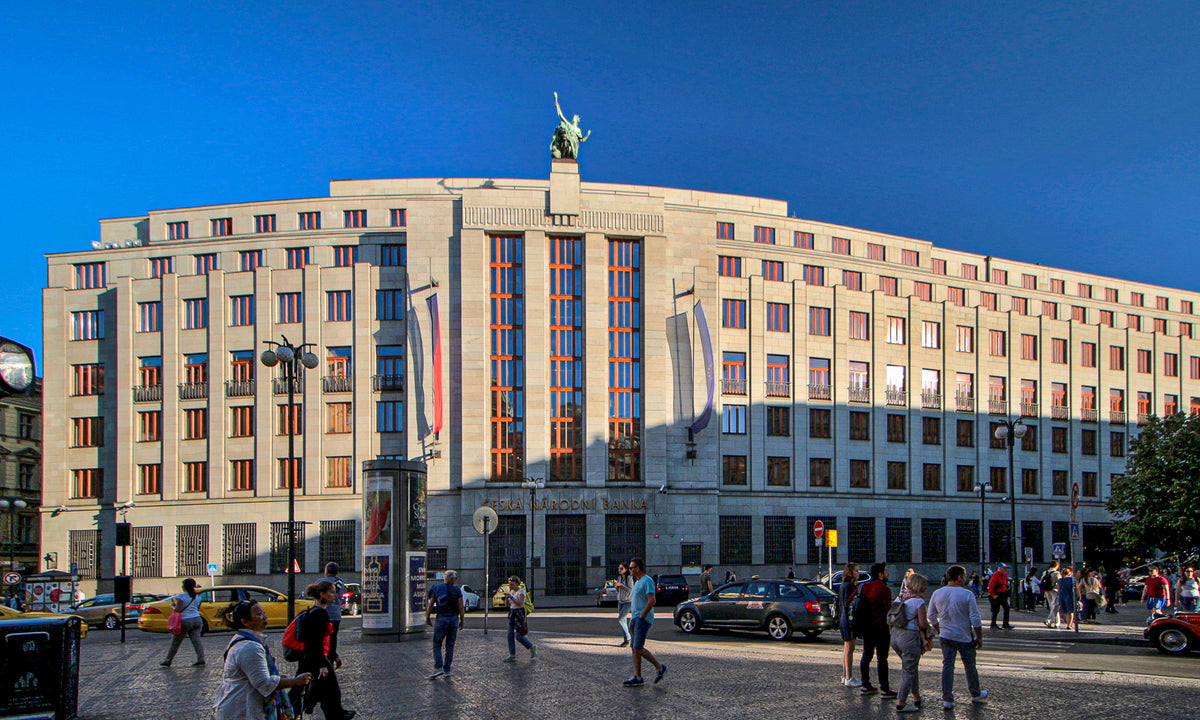
Cover photograph shows the Czech National Bank headquarters in Prague on May 7, 2018. Photograph by VitVit via Wikimedia Commons, licensed CC BY SA 4.0. Used unchanged as an archival illustration of the reporting institution.


